VPN: Do you really need one to protect yourself?
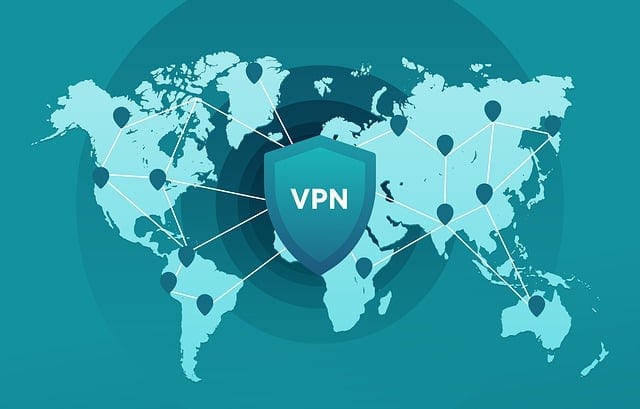
Whenever we browse the Internet, we expose our personal data to certain risks. A VPN (Virtual Private Network) is supposed to act as a "digital" shield by hiding our IP address and securing our connections. But is it really essential today to protect our privacy and personal information?
What is a VPN and why use one?
We spend an unreasonable amount of time on the Internet (At least I do 🙁 ... I hope I'll manage to reduce this wasted time over the next few years....) while our personal data, more or less sensitive, travels everywhere. Yet it remains vulnerable, especially on public networks.
A VPN works like a secure tunnel between our device and the Internet. Instead of connecting directly to the websites we visit, our traffic is routed through a remote VPN server. The traffic between our device and the VPN server is encrypted, while our public IP address is hidden from the websites we visit. As a result, it becomes much harder for malicious actors, hackers, or even our Internet Service Provider (ISP) to monitor our online activity.
Private browsing or VPN: What's the difference?
Many people wonder whether the "private browsing" mode built into web browsers is enough to protect our information. The answer is no. Private browsing simply prevents your browsing history and cookies from being stored on your device. It mainly avoids leaving local traces on the device being used, but it does not protect against online tracking.
When and why should you use a VPN?
Using a VPN is especially useful on public Wi-Fi networks. These networks are often poorly secured and are an easy target for cyberattacks. Thanks to a VPN, our data is encrypted and our connection is protected, allowing us to browse safely.
But that's not its only advantage. A VPN also makes it possible to bypass certain censorship measures or geographical restrictions. In France (I'm French), the media release window is particularly restrictive (almost unimaginable in other countries...). Sometimes you have to wait several months after a movie is released in theaters before you can watch it on a streaming platform! Even worse, when a TV channel acquires the broadcasting rights, the movie may temporarily disappear from streaming platforms... And that's really frustrating! So yeah, you can probably understand why I really need a VPN. ^^
A VPN can often help access services from your home country while travelling, although many streaming platforms actively detect and block VPNs.
A VPN shifts trust
A VPN doesn't eliminate the need to trust a third party—it simply shifts that trust. Without a VPN, it's our Internet Service Provider (ISP) that can observe part of our online activity. With a VPN, that trust is transferred to the VPN provider, which can potentially see the destination IP addresses, connection times, and, if the traffic isn't encrypted end-to-end, part of the transmitted data!
That's why it's essential to choose a reputable provider with an independently audited no-logs policy, RAM-only servers, and a privacy-friendly jurisdiction (which isn't the case everywhere...).
The limitations of VPNs
A VPN improves our privacy, but it doesn't make us anonymous. If we're logged into a service such as Gmail, Facebook, or Discord, our activity is still associated with our account. It also doesn't protect against phishing, viruses, malware, or compromised passwords. Some websites and platforms can also detect VPN usage, which may prevent you from bypassing geographical restrictions... sigh :'( Finally, a VPN may slightly reduce performance, and its level of protection largely depends on the quality of the service.
VPNs are also useful for developers
VPNs aren't just for protecting your privacy. Since this website is aimed at developers and other IT professionals, we know they're widely used in software development to securely access corporate networks, development servers, databases, and testing environments that aren't exposed to the Internet. They also make it possible to simulate connections from different countries in order to test geolocation-based features, translations, or regional restrictions, all without exposing these infrastructures directly to the public.
Conclusion
A VPN helps secure our data, browse more freely, and protect our online privacy. It's especially useful while traveling or when connected to public Wi-Fi, providing a safer and more secure browsing experience, even if it's not a magical or perfect solution.
And for French people like me, it's almost indispensable (okay, I admit I'm exaggerating a little!) if you want to get the most out of streaming platforms.
Speaking of recent news, Windows 11's GDID helped the FBI identify a suspect despite the use of a VPN: https://www.tomshardware.com/software/windows-11-identifier-used-to-track-scattered-spider-perp-after-microsoft-shared-info-with-fbi-19-year-old-us-estonian-hacker-arrested-over-alleged-ties-to-infamous-extortion-group

cyrilou
-

The impact of technology on business scalability
Businesses must be both fast and adaptable—two essential levers for growth. Technologies like AI, automation, and cloud computing have become indispensable. Failing to adapt means risking serious setbacks compared to the competition. I once worked for a software company that didn’t believe in the cloud—this cost them dearly… We’ll explore how these tools are transforming […]
-

Artificial Intelligence: The next technological revolution after the Internet?
The creation of the Internet at the end of the last century revolutionized our lives (for better or worse, depending on one's perspective…). But it didn't happen overnight; it took decades to profoundly transform our societies after its invention. Artificial intelligence seems to be following a similar trajectory. Often overestimated in the short term—just look […]
-

Essential Python libraries for Data Science
When you're a developer looking to dive into data science, you immediately think of Python ^^ (Okay, maybe I'm a bit biased haha). It’s fair to say that Python remains the undisputed star of the field, with a massive and rich ecosystem!In this article, we’ll take a tour of the must-know Python libraries, organized by […]
Laisser un commentaire